

Viktor Samoilenko: Using VR therapy for psychiatric care in Ukraine
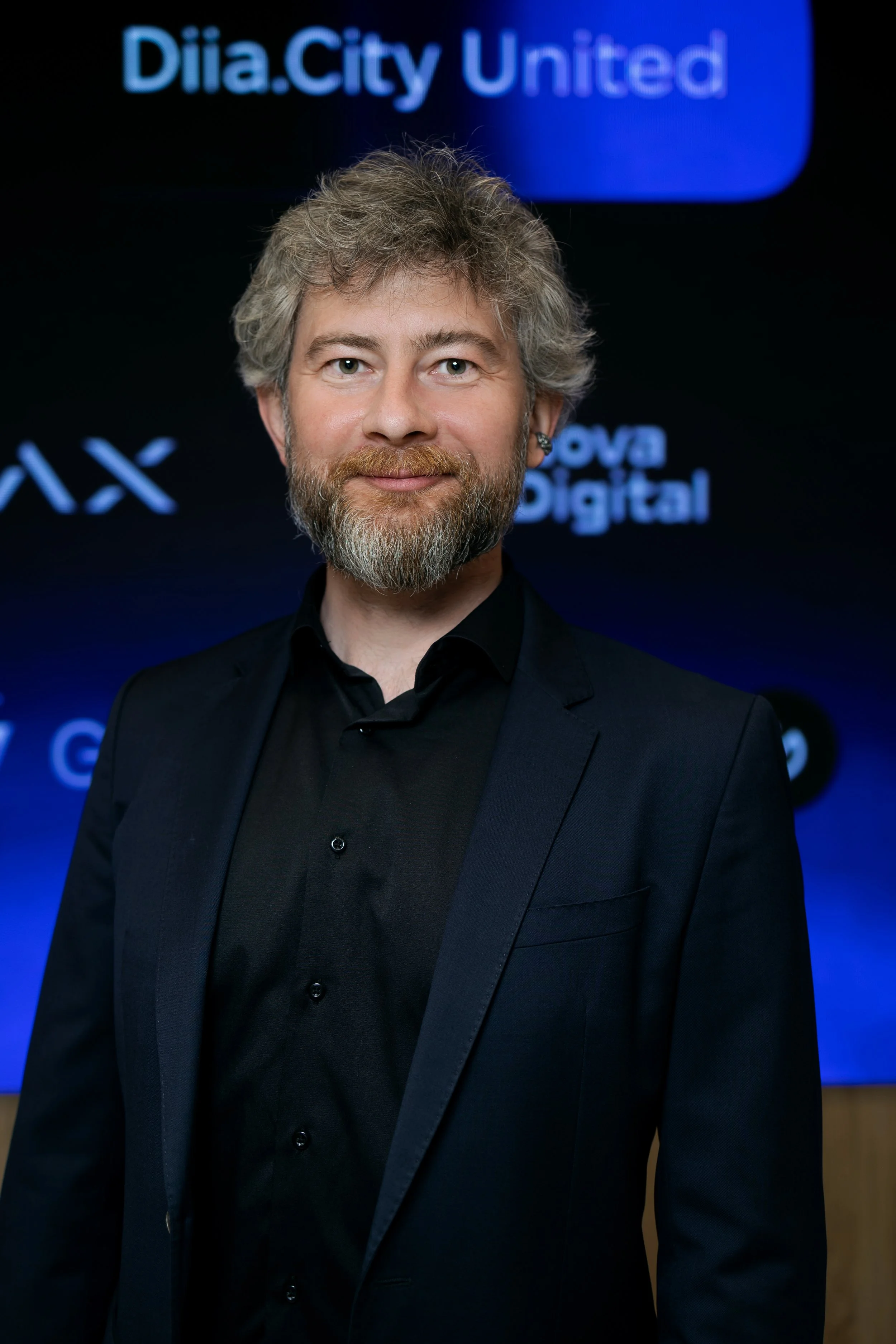
Viktor Samoilenko, founder and CEO of Aspichi, joins Jessica Hagen and Dr. Kim Bullock to discuss how his team is using virtual reality to provide scalable mental-health stabilization and trauma support for civilians and veterans in Ukraine during the war.
The following is a transcript of the episode:
BIO
Viktor was born in Ukraine 46 years ago, and after a while, received an Applied Mathematics Master's degree from the National Technical University of Ukraine.
He built a career from Software Engineer to Technical Entrepreneur and CEO. Psychology and the application of innovative tech in this area became a necessity after the full-scale invasion of Ukraine, and it is now a passion and personal goal of Viktor’s to help millions of people in Ukraine and beyond.
Jessica Hagen
Welcome back to Psychiatry XR, where we aim to inspire worldwide conversations around the use of extended reality in psychiatric care. I'm your host for this episode, Jessica Hagen, and I am joined by my co-host, Dr. Kim Bullock. Thank you so much for joining me, Kim.
Dr. Kim Bullock
Hi there. Excited about this podcast.
Jessica Hagen
Yeah, absolutely. In today's episode, we are joined by a very special guest, Viktor Samoilenko, founder and CEO of Aspichi.
Viktor was born in Ukraine 46 years ago, and after a while, he received an Applied Mathematics master's degree from the National Technical University of Ukraine. He built a career from Software Engineer to technical entrepreneur and CEO. Victor believes that psychology and the application of innovative tech in this area became a necessity after the full scale invasion of Ukraine, and says it is now a passion and personal goal to help millions of people in Ukraine and beyond. Viktor, thank you so much for joining us.
Viktor Samoilenko
It is a pleasure. Thank you very much for inviting and having me here. Jessica, pleasure to meet you. Kim, my honor to be on the same podcast with you.
Jessica Hagen
It is absolutely a pleasure to have you here.
Dr. Kim Bullock
Likewise, yeah.
Jessica Hagen
Can you tell our audience, Viktor, a little bit about your origin story and how Aspichi really came about?
Viktor Samoilenko
It is a quite a long story, and it was not about psychology first of all. We were thinking about combining 360-video and a VR headset to build a platform which will allow people to change experience. So it should be working like audio/visual teleportation. In one place, there is a person taking constantly surrounding and transfer it as a video stream to another place, and the person in VR headset can put it on himself, and as soon as video is taken from the first point view, actually, person in VR headset appears himself on the place of the first guy. So, he can spectate and understand what is happening somewhere and get it personally, immersed, involved.
And the company was founded at the end of '21 and we came to Ukraine together with my partner. Before that, we actually doing a lot of work worldwide, traveling a lot. And we came to Ukraine to open a Development and Research Center, which was opened for two weeks, and then we immediately closed it because of the totally unexpected, full-scale invasion.
Then clearly it was a shock and a crisis from many angles and necessity to decide how to contribute immediately. So, we were thinking for quite a long period of time how we can support the nation in that terrific circumstances, and some article came to us about using VR as exposure therapy for rehabilitation of veterans in the United States. So, we basically were inspired by that, and considering that we already were aware of virtual reality technologies and 360-video, we understood that we can make a technology which can help constantly growing quantity of veterans coming back from the battlefield.
And then it was actually understanding that civil population will suffer at a large scale. And as well, we do have soldiers being on active duty for extremely long period of time. So, it's just comparable to the Second World War.
So, with the VR, our idea was to create a scalable solution to support people, and what we didn't have is understanding of psychology, and so we basically immediately tried to get to the team, the members who can compensate that gap. And we were lucky. We do have, at the moment, a small department of psychologist, really prominent, outstanding people with 10 years of rehabilitation and the journey started.
Jessica Hagen
That's absolutely amazing, and so I have one question for you, that this technology with VR, it does require so much setup, a lot of technological savvy, right? So why and how do you think that it's important that individuals in Ukraine have access to this modality in particular that may be a bit more difficult to navigate than, say, just sitting with the psychiatrist in-person with no devices needed.
Viktor Samoilenko
That is exactly a point. So, when we do have millions of people, there is no possibility to put them in front of the psychiatrist.
Jessica Hagen
Right. Absolutely. Yeah, that's true.
Viktor Samoilenko
Given the amount of people we do have with proper knowledge and experience to provide a high-quality support of the people, they're burning out at the moment. And I believe it's extremely difficult profession in general. So you probably heard about the vicious circle of providing psychology support. It is about the situation when psychologists are providing support to as many people as that is possible to bear, but in order not to burnout and keep themselves at the right level, they're actually using the services of other psychologists who are using services of other psychologists. So it's never ending.
Jessica Hagen
Right.
Viktor Samoilenko
Yeah, and it is very common that because of the required empathy, and the people in that profession are burning out. And if you look at the massive amount of people, it's just a nightmare, especially the trauma-related or caused by the wa. It is significantly more complex and not easy to deal with. So, VR technology, it sounds quite futuristic, and I would say it is common perception that is a kind of something complex from a technical point of view. It is actually a mobile headset with the proper optical lenses technology, which can create the right immersive experience.
So, it is not so complex, and from perspective of affordability, it is actually quite a cheap device in general. So it's really a range of a mobile phone. The best thing in it, it's not tiring. So, it can provide support 24/7, seven days in a week in a row. So that's excellent mean for the scalability of psychological services.
Dr. Kim Bullock
So, you're using it as an automated replacement for therapists and you avoid secondary trauma and burnout and clinicians. Is that right?
Viktor Samoilenko
Yeah, absolutely. So, at that point of view. So, we are focusing on the basic level of the support. So, we are providing possibility to our clients to stabilize their state and overcome fatigue and deal with the primary symptoms of the trauma, like depression and anxiety.
Dr. Kim Bullock
Okay. Are you using any evidence-based interventions that we would know about, like EMDR, mindfulness? Are you, I know European and other international research has different evidence-based interventions and even different classification systems, but are you using evidence-based interventions for any certain diagnoses?
Viktor Samoilenko
Yeah, so I do hear two questions. So, in methods and techniques, definitely. It is basically a magic and complication in building such kind of product. So, we are putting in VR mindfulness technique, CBT [Cognitive Behavioral Therapy]. We are using widely ACT [Acceptance and Commitment Therapy] as well. We are planning to using VR to fix state, but it is a bit complex in terms of the scalability of solution. So in VR, it is assuming the one-on-one relationship. And here we are coming to the diagnostic and understanding of the state of a patient, which is possible, and we are really looking into it and preparing the product for the future capabilities to understand the state of the patients. The modern more advanced models of VR headset, allowing to capture a lot from the behavioral reaction of the person on the pretty powerful audio-visual input, we can track the eyes (pupils), the changes of face features, track the head movements and body movements, and based on that, I believe we will try to imitate the therapist justification of the state of the person. And yeah, it's quite a hype, but yeah, it will be a neural network, and there will be AI algorithms for interpreting behavior of the client in order to understand his state. So it will be kind of next step. We are planning for the next year to introduce it, and for the moment, we are collecting the data, and we do have huge access to the real-world data.
Dr. Kim Bullock
So, right now...I see plans to do a lot of amazing things...but right now, are you using it like as psychological first-aid, or I'm really curious about how you're actually using it now. What interventions are you delivering and to which populations? Is it PTSD? Is it depression? Is it just for, you know, first responders? What are the uses currently going on?
Viktor Samoilenko
So, we have the scalability as well, coming from our psychological approach, and we are using diagnostic approach, which tells that we can work with the most oftenly seen symptoms ,like depression, anxiety, fatigue, insomnia, impulsive behavior, et cetera, which are common for 60 to 80% of the mental disorders. So, we are covering really a large spectrum.
Dr. Kim Bullock
So, you're just kind of focusing on symptoms and interventions for symptoms rather than...okay...
Viktor Samoilenko
And if we are talking about the application. So, it could be used as part of a therapy session. So, therapists in Ukraine are using the application to open up the client and deal with the tunnel view, which is quite a common thing when you do have a severe trauma. So, the person is opening up, and that is an opening to the session with the therapists. So, it could be a part of a therapy session. It could be used as an instrument to keep the resource level high and get a psych education, basically getting the certain skills how to cope with the negative state in between the therapy sessions. It could be used as a group sessions that is most widely used use case for assisted living in the United States. So they're allowing to put residents in a circle, give them certain therapy experience, and then they're kind of discussing it, discussing feeling, discussing the immersive experience, and having the people relaxed and opened.
Jessica Hagen
So, what have been some of the challenges of implementing this during wartime?
Viktor Samoilenko
So, there is one thing it is related to achieving the high-quality of immersion, and for that purpose, we are using 360 videos. So we are actually filming or capturing those environment, which can be considered as a safe place. And movement around country is not an easy thing, and we are limited in this and another, it is a pressure to have a product ready and available for many. So, demand is, is really big. We have to overcome perception that VR is about gaming.
Jessica Hagen
Right.
Viktor Samoilenko
That it could be a powerful intervention tool. So, it was difficult at the very beginning, but then it was just really easy, spreading exponentially. Most important thing, it is tireness of the team, I would say. So we are part of those who are requiring support. Many of us are not sleeping well for kind of several years. That is the actual situation.
Dr. Kim Bullock
Yeah.
Jessica Hagen
Yeah and insanely difficult, I'm sure.
Dr. Kim Bullock
You know, I've tried out, I can't remember how we got connected, but we've tried out your content. It's beautiful, and it should inspire others, you know, like you're able to get a system together to launch it, even in these really difficult times. So, I think you're an inspiration for many developers.
Dr. Kim Bullock
And I wanted to ask you, what headsets are you delivering inside your country when you're using it for your purposes? What kind are you using? Mobile headsets? Are people using gaming devices, or how is it being delivered? What kind of hardware devices?
Viktor Samoilenko
If you don't mind, I'll tell you how it is working right now, in general. So we are not working, kind of, in B2C mode. We are not providing to the client itself. So we are working with rehabilitation centers, clinic stabilization points, and we are delivering certain amount of the headset to them. So, the person who at least can deliver the first psychological aid can supervise the sessions, because it is really difficult to foresee what part of the immersive experience can trigger a traumatic experience, and we are trying to make it as neutral as possible, keeping the necessity to be impactful. Nevertheless, there are a lot of chances.
So, considering this, we are delivering headsets to clinics, and at the moment, first priority is having a proper balance between the quality and the price. We are talking about the thousands of headsets. Actually, it is Oculus, Oculus 2 in the beginning. Oculus 3 and 3s at the moment, but the other is headset agnostic. It requires certain fine-tuning, but in general can be easily adopted to other types of it.
Jessica Hagen
You said that you're creating your own 360 video for the experience. So, you're recording it within Ukraine, and then are you doing that for exposure therapy, for PTSD?
Viktor Samoilenko
It's vice versa. So, it's counter exposure. So when we are talking about the exposure, we are trying to reproduce traumatic experience. But what we are trying to do, we are trying to deliver a safe place. So something which will be far away from the stressful conditions or stressful environment. So it is about the beautiful views in mountains, waterfalls...
Dr. Kim Bullock
So, you're not using it for imaginal assistance and imaginal exposure like Skip Rizzo does. It's a very different, sounds like, method?
Jessica Hagen
Yeah, that's what I was thinking about, Kim.
Viktor Samoilenko
And we know that exposure therapy as well cannot be scalable, so it's one-on-one work with the person, really crafted. It requires a lot of attention. So, we are thinking about doing that, but we are coming from other side of the therapy. So first of all is stabilization.
Dr. Kim Bullock
Stabilization. Sounds like you're really working on stabilization.
Viktor Samoilenko
Yeah, and then moving to the trauma itself. Yeah.
Dr. Kim Bullock
So, you're using the Oculus 2 with organizations internally right now?
Viktor Samoilenko
Oculus 2 isn't available at the moment. So, right now, Oculus 3 and 3s.
Dr. Kim Bullock
Oh, Oculus 3 and 3s. Got it. What are your plans for expanding? I mean, I was amazed that you've got this English version, and sounds like you're thinking already about other markets. And I'd just love to know what you're thinking, your strategy and making this available to others internationally.
Viktor Samoilenko
We would love to think that our crisis here in Ukraine will be an opportunity for the world to learn more. And we do have, globally, really terrific figures. They are growing. It is at the moment, one billion people actually suffering from the mental disorders, and clearly we can provide, a professional one will not be able to cover such figures. So, there has to be a technology, and we are dreaming about providing help to 100 millions of people at least.
We have started offering a product in the United States market, and it was very well accepted in acute care, skilled nursery, and it is amazing in general. So we do not have such kind of facilities in Ukraine, so the care, which is provided to the people who has a lot of limitation in taking care about themselves is really, really touching. So we are proud to help them a little bit and decrease the load on the social workers, recreational therapists. But it is the beginning. There is very nice aspect of using VR technology for psychological rehabilitation. It is basically a factor of engagement. So, when we are talking about the veterans or active duty soldiers, it's quite difficult to engage them into therapy, and much simpler to offer them to try a VR headset. Let's take five minutes. Let's see what will happen, and what is happening that first step into therapy is already done. Moving forward.
We do care about the younger generation. We are quite terrified with the quantity of drugs offered to the younger generation and as well to the elder people. So there are many, many, many work, and it's extremely important for the health of nation, for the economy at the end.
Jessica Hagen
Yeah, absolutely. There's such a need where you are. Do you have enough headsets to be able to meet that need?
Viktor Samoilenko
No, but we are working on it
Jessica Hage
Well, if any of our listeners have the ability to offer some extra headsets to Viktor, I think that that would be really beneficial. Is there anything else that our listeners should know that maybe they could help with, if possible?
Viktor Samoilenko
We would be really open to any kind of collaboration, partnership, exchanging of experience, possibilities to make trials, suggestions, experiments. So, VR therapy is considered, and please Dr. Kim, correct me if I'm wrong, is considered as one of the prominent mean psychological modalities to treat trauma. It's promising and should be very effective.
Dr. Kim Bullock
Yeah, yeah. And if people want to get in touch with you, I do want to say what intrigued me most is that you have mindfulness, CBT and EMDR potential, ability to create experiences that can augment that treatment. So, I think about VR as augmenting and making more efficient or comfortable evidence-based interventions, and it sounds like you're set up to create those things. So, if people wanted to explore that with you, how would they reach you, or how would they work with Luminify or Aspichi?
Viktor Samoilenko
We are really easy to start a conversation with. So, it's either LinkedIn, Facebook, just find us- A.S.P.I.C.H.I.- and we will definitely reply your message, or just send me an Email at viktor.samoilenko@aspichi.com.
Jessica Hagen
And if there's ever any questions about how to contact him, or if you didn't understand, you know anything that we just said, you can always look at PsychiatryXR.com as well and contact us, and we'll get you in touch with Viktor.
Dr. Kim Bullock
Yeah. Well, the best of luck to you. I think what you're doing is so inspiring, and we want to support you, and I'm sure other people do too, and it's very useful how you're contributing.
Jessica Hagen
Yeah, we are so thankful that you took time to speak with us. Really appreciate it, Viktor.
Viktor Samoilenko
Thank you. It was a pleasure.
Jessica Hagen
It was absolutely a pleasure to have you. This episode was brought to you by Psychiatry XR, the psychiatry podcast about immersive technology and mental health. For more information about Psychiatry XR, visit our website at PsychiatryXRcom. Be sure to subscribe to the podcast, and tune in again next month to hear from another guest about XR use in psychiatric care. You can join us monthly on Apple podcasts, Twitter, Spotify, or wherever you get your podcast.
Psychiatry XR was produced by Dr. Kim Bullock, Jonah Brian and myself, Jessica Hagen. Please note this podcast is distinct from Dr. Bullock's clinical, teaching and research roles at Stanford University. The information provided is not medical advice and should not be considered or taken as a replacement for medical advice.
This episode was edited by David Bell, and music and audio was produced by Austin Hagen. Thank you so much for joining us. See you next time you