

Peter Oykhman and Daniil Andreev: Integrating sound spice technology, AI into VR
In this episode, Peter Oykhman and Daniil Andreev of PsyTech VR discuss the process of developing and scaling unique virtual reality experiences focused on helping individuals overcome anxieties, phobias, anger, stress, and PTSD.

The following is a transcript of the episode:
BIO
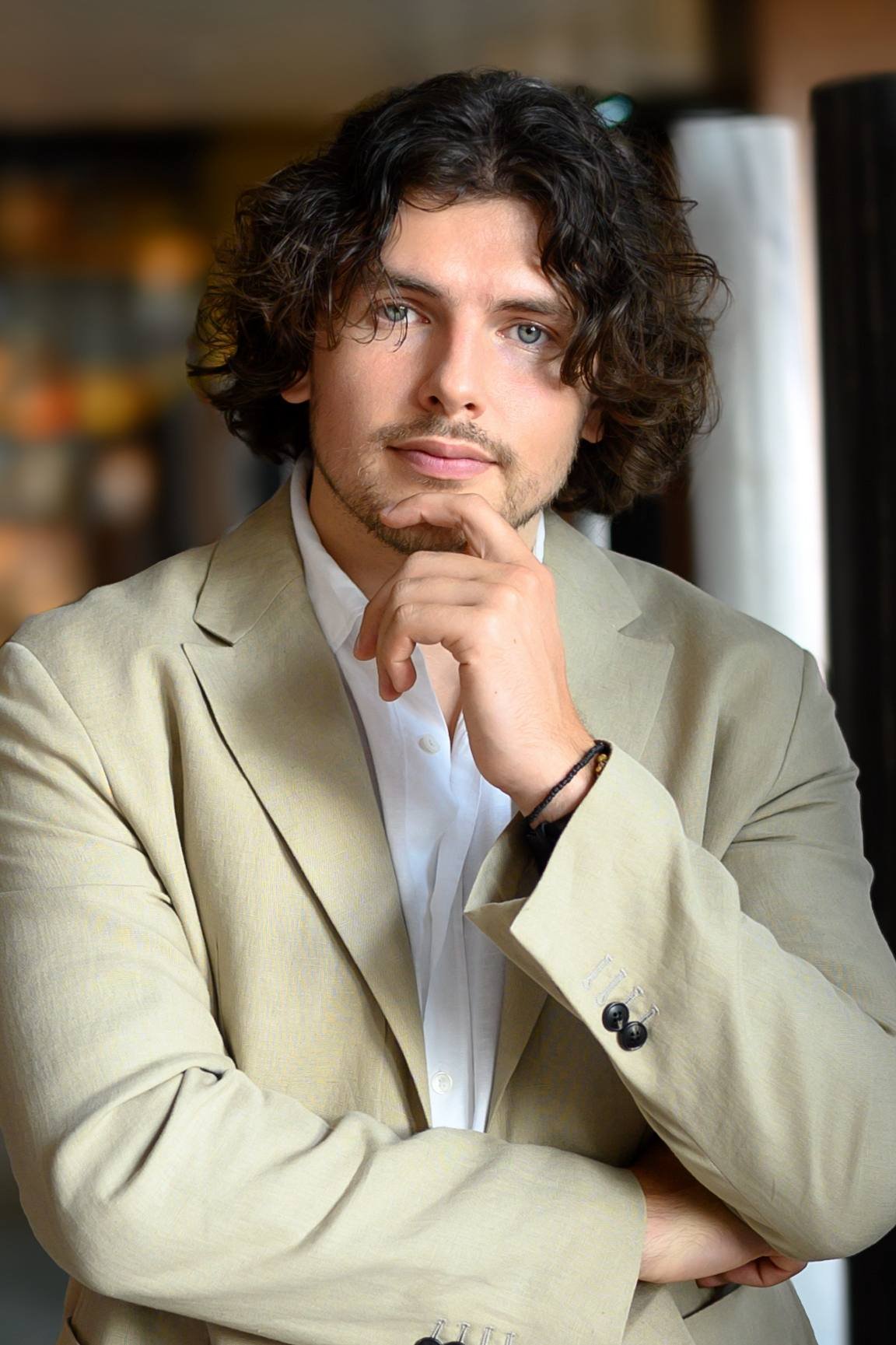
Daniil Andreev is the Chief Product Officer and Co-Founder of PsyTechVR, where he has spent the past four years pioneering XR solutions for mental health and well-being. Under his product leadership, PsyTechVR integrates AI-driven virtual reality therapy into clinical, corporate, and government settings, expanding access to evidence-based care.
Daniil’s approach is informed by mentorship from VR therapy visionaries Dr. Elizabeth McMahon and Dr. Albert “Skip” Rizzo, whose research guides PsyTechVR’s immersive exposure therapy, and mindfulness platforms. Passionate about human-centered design, he champions ethical innovation that bridges neuroscience, psychology, and emerging technology to improve lives worldwide through scalable, data-driven therapeutic experiences.
BIO
Peter Oykhman has over 35 years of experience leading software development and IT companies. In 2021, he co-founded PsyTechVR with his partners, and the company quickly emerged as a leader in Virtual Reality Exposure Therapy (VRET) and VR-based mental wellness solutions.
Dr. Kim Bullock
Welcome back to Psychiatry XR, where we aim to inspire worldwide conversations around the use of extended reality in psychiatric care. I'm your host for this episode, Kim Bullock, and I'm joined by my co-hosts, Jessica Hagen and Jonah Bryan. Hi, guys.
Jessica Hagen
Hello, everyone.
Jonah Bryan
Hello.
Dr. Kim Bullock
In today's episode, we are joined by two very special guests, Peter Oykhman and Daniil Andreev.
Peter Oykhman
Hello.
Daniil Andreev
Hello. Hi.
Dr. Kim Bullock
Peter Oykhman is the CEO of PsyTechVR, a company specializing in developing virtual reality and augmented reality solutions for mental health therapy and research and training. Peter is a visionary leader in technology with over 30 years of experience in software development, consulting and entrepreneurship. He is a serial entrepreneur, successfully founding, scaling, and exiting three previous companies. Peter combines expertise in software engineering, sales, marketing, and global business strategy, and serves as co-chair of the VR/AR Association, an international organization that fosters collaboration between XR, mixed reality, spatial computing and artificial intelligence.
Peter has extensive cross-industry experience that enables him to build innovative software products across really diverse sectors, and he remains CEO and owner of CorePartners and founder of two other companies.
His partner, Daniil Andreev is the chief product officer and co-founder of PsyTechVR, where he has spent the past six years pioneering XR solutions for mental health and well-being, and under his product leadership, PsyTechVR now integrates AI-driven virtual reality therapy into various clinical, corporate, and government settings.
He is dedicated to expanding access to evidence-based care, and Daniil's approach has been informed by mentorship from visionaries such as Dr. Albert, "Skip" Rizzo and the late Dr. Elizabeth McMahon, whose clinical principles and research have guided PsyTechVR's immersive exposure, EMDR, and mindfulness platforms. He's passionate about human-centered design, and he values ethical innovation that bridges neuroscience, psychology, and emerging technology to improve the lives of people globally through scalable, data-driven therapeutic experiences. Welcome, Daniil and Peter. So great to have you.
Daniil Andreev
Hello.
Peter Oykhman
Hello.
Daniil Andreev
Thanks for inviting us here.
Dr. Kim Bullock
We start with most guests here talking about their origin story. And we would love for you to walk us through the origin for PsyTechVR and how did you end up actually pivoting from kind of this entrepreneurial background and marketing background to the mental health space and XR after your previous successful ventures. I would love to hear PsyTechVR's, I guess, origin story.
Peter Oykhman
Well, Daniel and I, we have a little bit different story, or very different stories. But one thing I actually wanted to add, that is not in my bio but it's important, you affected, I think, both of us greatly as well, because you've been doing this for a long time, and every time we're talking to you, learning something new. So actually, I'm happy to say that we learn from you a lot.
Dr. Kim Bullock
Well, thanks.
Peter Oykhman
I've been doing IT since end of 80s. I'm old. I'm doing IT since I graduated from college at '87.
Dr. Kim Bullock
Hey, that's when I graduated. We're not old.
Peter Oykhman
Right, right. So, I'm just doing IT for a long time. And the reason why I mentioned it, it's not because I'm old, but because I went through a multiple kind of cycles of IT mainframes and, you know, all these personal computers, and then not so personal computers. And, you know,
Dr. Kim Bullock
Yeah.
Peter Oykhman
Java and .com and everything. And for me personally, what's driving me that it feels like, especially with this virtual reality and mixed reality, I remember this feeling, you know, during .com where people are just going and creating stuff, and essentially are free to create something new and exciting. And right now with IT, it feels like it's the same kind of a spirit people are doing this, AI and VR and, you know, all kinds of stuff. And it's a very interesting feeling that you could actually, truly could go create something useful, and the people will go and explore and hopefully like and use it, especially with the therapist, because our solution is specifically for clinicians, will use it and it will help their patients. That's kind of my story.
Dr. Kim Bullock
So, just kind of an evolution of the technology, and you're just riding the wave.
Peter Oykhman
Absolutely, and frankly speaking, like I have another company that actually involved in a completely different business, logistics. At some point, I got bored with the logistics, but I found this virtual reality. I was trying to figure out where to apply a virtual reality and offer it to my current clients. And I keep saying that my current clients didn't like virtual reality, so I have to go and find better clients who will like virtual reality.
Dr. Kim Bullock
Well, thank you.
Peter Oykhman
So, that was kind of a funny story, but again, you know, Daniil has a completely different story. He was just fresh out of college and full of ideas. And, you know, it's been a lot of fun.
Daniil Andreev
Yeah.
Peter Oykhman
He is very much enthusiastic, driven, and I really appreciate that.
Dr. Kim Bullock
Yeah, Daniil, I was really wondering about your story and actually career path, because a lot of people listening are just getting into the field. And actually your education and how you look like you pivot somewhat from marketing into this space. So, it's so fascinating.
Daniil Andreev
Yeah, thanks. So, my story feels very interesting. I think I came prepared for meeting Peter and launching PsyTechVR because of two things. So, first, my mom, she's a clinical psychologist, and it's, yeah, that's a small story behind. I don't want to say that I was kind of asking her every day and every time something about the psychology. But one day, she shared with me the thing that running emotional exposure isn't that simple and easy every time you have to find a unique case for working with a client. Emotional exposure is not for everyone. That's the first thing.
Daniil Andreev
And second, before meeting Peter and we started PsyTechVR, I was running at VR lab at the University where I was studying before PsyTechVR and I was running this lab for two years. We've been integrating different gamifying experiences to the education. I want to say that we, for example, we were educating students to learn accounting in VR, but we were bringing some interesting things, like relaxations in VR, things to the YouTube, some other health logistics and VR, some other things.
Daniil Andreev
And next, yeah, we met with Peter. We were absolutely driven about this idea of running a great use case for the VR and psychology - psychology, exposure therapy, relaxation, things and VR - that's where we started.
Dr. Kim Bullock
Fascinating.
Daniil Andreev
We started with a use case.
Dr. Kim Bullock
Yeah. Okay, yeah. I think that gives you a lot of street cred to me that you had a psychologist mom, because my kids, like, hear all these cases, you know, and stuff, and you kind of, by proxy, have, like, a mental health background. That's fascinating.
Jessica Hagen
Daniil, what was it about virtual reality specifically that kind of wanted you to merge that clinical psychology background with this immersive technology?
Daniil Andreev
Emotional exposure. So, my mom, she was working with a client, just without saying names, the person who had a phobia of heights. This person was having board meetings, they are in the skyscraper, and every time the doors of the elevator open, he was totally scared because of this tremendous view over the city.
Daniil Andreev
My mom was working with him with emotional exposure. Unfortunately, it wasn't a successful case. And one of the days my mom came back home, we were having a dinner. She was a little bit upset, and she was describing that, yeah, there was a case, it wasn't that successful, and at that time I had this Oculus Quest 2. It was kind of 2022, end of '21, I don't remember. I had this Richie Plank experience in my headset, and I showed her, and she was amazed. She said, this is something that we ask our clients to imagine. This is where my idea about this started. And I would say next it was a great thing, because I got introduced to Peter, and Peter also has his ideas about VR and psychology. And we both brave and ready to do something big. To start up something big. We came together with the idea of creating VR for psychologists. This is where we started more than four years ago.
Jessica Hagen
Does your mom actually use your experience within her practice
Daniil Andreev
Well, she's working a lot with kids in telehealth, and the telehealth is definitely a path where we would like to develop our company. We do have now features for running telehealth. PsyTechVR is perfect for in-person therapy, and we're discovering telehealth. There are a lot of capabilities for running this. We just need to punch in a few features for this specifically.
Jonah Bryan
Daniil, so I have a background in like user experience and product design. I'm curious what your MVP [Minimum Viable Product] looked like in the beginning, and how did you start to test apps in the beginning?
Daniil Andreev
I think we were creating something like a claustrophobia experience for a very small, tiny apartment, not that cozy. And we actually started with Unity. We found some assets. We build up some kind of experience, and we realized that this design, this 3D design, all these things, they look cartoonish. That's why we wanted to move towards the Unreal Engine 5. PsyTechVR is created under Unreal Engine 4. Next we move to 5. It was one of those experiences, very laggy at the beginning.
Peter Oykhman
Remember, one of our first exposures was actually a person on the roof. Yes, that was also one of our first exposures, and I keep telling Daniil that we actually have to start with a platform rather than with exposure therapy itself, because anybody could build an exposure therapy, but it doesn't make it a product.
Daniil Andreev
Correct.
Peter Oykhman
Running a couple companies, from my experience, you have to create a pain pill rather than a vitamin. That's kind of an oldest kind of saying that it's actually has to significantly add a value to whatever is there right now. And the second thing is, unless you will build a product that you could sell, you know, because you cannot. I mean, can you sell one exposure? Sure, but you actually have to build a product that people are willing to pay money, and, you know, that's what's making a difference between one exposure and a marketable product.
Dr. Kim Bullock
Yeah.
Jonah Bryan
Makes a lot of sense.
Daniil Andreev
We just started with one APT file in the headset, and Peter is right, we moved towards learning platform, they control all their experiences that work with statistics and now it totally makes sense.
Dr. Kim Bullock
Yeah, for meeting with a lot of startups, you all struck me as having really good empathy. And I think part of design thinking, being able to see what people need and listen to them, and come with a kind of sense of humility and just not knowing is the best place, I think, to listen. And I think that's just a strength that I noticed from you from the get go and that the other thing that I really wanted to ask you was you also are unique in that you're starting off with this B2C kind of company that's selling your services directly to providers, rather than many other XR mental health companies are going towards generating enough investment by going to this kind of B2,B business-to-business, selling to like another business, such as a healthcare organization or a third-party insurance, and, yeah, how you've thought through that process and and why you did that.
Peter Oykhman
It's a little bit more complicated, because, in a way, we are a B2B business, because we are going to clinicians. We're talking to psychologists, psychiatrists. And the difference is…
Dr. Kim Bullock
That's true.
Peter Oykhman
...our ideas, yes, we want to go to individuals like, you know, B2C model, but…
Dr. Kim Bullock
Oh, you're thinking the patient is the customer not the provider.
Peter Oykhman
Right.
Dr. Kim Bullock
Okay.
Peter Oykhman
Right. So, that's where it's getting very confusing.
Dr. Kim Bullock
It is.
Peter Oykhman
So, essentially, our end user is actually a patient. So, everything what we do is towards the end user as a patient, right? But we are going through the clinician for two main reasons: because we want to be a part of a standard clinical experience, like CBT, EMDR, and we want to give a tool to the clinicians that will make their life easier, better, you know, but our goal is to provide additional tool to the clinicians. Again, we don't have a crown, and so we're very humble in a way that, yes, it's one of the tools clinicians will be using. Maybe not every patient, maybe not for every case, but it's additional tool they didn't have before. Now they have this new technology that is available, and it only makes sense to use it as a mixed reality. It is just a tool. It's not going to replace anything. It's like, AI, right? It's just another tool in our application.
Dr. Kim Bullock
It's an enhancer.
Peter Oykhman
Right.
Dr. Kim Bullock
Yeah.
Peter Oykhman
Not going to replace anything. You know, like, every time I see the application for like, anxiety, that, oh, you know, this is for the patient. I mean, it's like AI tool that, you know, targeting the patient. I think with the current AI state, it's super dangerous because you have no control over this. So, that's why we're working with clinicians. It's their call. You know, they will prepare for the session. They will create this scenario. They will pick and choose what scenario to use, and they will use it. Again, like, answering your question, it's not that we're against going to bigger businesses or anything. No. I mean, we will be happy to work with, you know, well actually we are starting working with VA and, you know, bigger hospitals, but I think it's super important that clinicians will be comfortable with what we offer.
Dr. Kim Bullock
Yeah, I think that's unique, maybe from your empathy...
Peter Oykhman
Right.
Dr. Kim Bullock
...and understanding...
Peter Oykhman
Exactly.
Dr. Kim Bullock
...that you saw that that was necessary.
Peter Oykhman
We understand that our customers are actually clinicians. Our customers are actually their patients. And this is, this is what we're building. This is how we're building it to be used by clinicians for their patients. Like hospitals, eh.
Jessica Hagen
Yeah, like, I think it's something that's so obvious too, but a lot of companies don't necessarily focus on that, you know, like the clinicians and the patients are your customers. So, I don't know why you wouldn't make sure that you're building around that.
Peter Oykhman
I can tell you why, because it's much easier to get your investments. It's a much easier to get your money if you're saying, "Oh, the hospital network or insurance companies will be our target." Right? You know, talking to investors, it's a clear goal going to, you know, insurance companies, clear goal to go after, you know, huge hospital networks. At the end of the day, they're not the customers, really. The customers are actually people who will be using the applications. The people, their patients are the customers. That's what's important.
Dr. Kim Bullock
And the incentives might be to save money and not give access to it, even though they have it. So, yeah, it gets complicated, and there gets to be barriers.
Peter Oykhman
And this is why application is not that expensive either, because we think that it should be affordable by clinicians. And despite the common belief, not a lot of them are making a lot of money. So, you know, our price tag of $120 a month, I think, most of the clinicians could afford. So, that's the same kind of ideas that, you know, of course, hospital networks will afford much more. Of course, you know, insurance companies can afford much more than, like, $120 for insurance company. What is it? It was like, is that, like a one face mask or something, they're used to much higher price tags, where we're saying that if clinicians will be using it, if patients will be using it, this is where the real value is.
Jessica Hagen
Well, it seems too that, think about it in the long-term as a business objective. You want the clinician to continuously use your product, so the hospital system continuously buys your product. So it's like, it doesn't make sense if you sell to a hospital and you make a bunch of money in one transaction, that's not going to do you much in the long run, unless you're actually giving, like, a valuable offering to the clinician.
Peter Oykhman
It would be nice, but...
Jessica Hagen
Right, But, let's keep the momentum going.
Peter Oykhman
Right. Right.
Jonah Bryan
Peter, can I ask you about the hardware barrier? Because it's obviously a platform play on top of like a product like the Meta Quest and other virtual reality headsets. So when it comes to actually getting the hardware in the hands of therapists, how do you have that conversation? How do you structure that into the business model of the company?
Peter Oykhman
They have two options. They could buy their own hardware. If they have a hardware, most likely will work on it, because, again, we're a cross platform. We work on Meta. We work on Pico. We work on HTC. We don't work on the Apple devices, because none of our customers can afford that. You know, none of them can afford for paying like $3,500 for an Apple headset. It's just not your typical clinician. But if you want to buy your own, go for it. If you want to buy from us, yeah, absolutely. We'll buy it, install everything, and ship it to you. So again, hardware. Daniil is selling our sets like every day, and he can probably tell you more why people are buying it. But the idea is you're really trying to make it easier. Because, again, our clients are not real IT people. So, if we could remove more barriers, like, you know, this buy-in kind of complexity is better. Because, you know, of course, again, bigger hospital networks or VAs, they got their IT department, and they could set up their, you know, headsets, absolutely, but an average practice with two, three, five doctors, they don't have IT people. So, if we could make this process easier, you know, we'll be happy.
Dr. Kim Bullock
Yeah, my lab, when I told them I was doing this interview with you, and what questions should I ask because we've been playing around with your product was the commonality with everything that we've used is the onboarding problem and making it easy. And so I wonder, yeah, what you're thinking those solutions are, or is that the biggest barrier you see? Or are there any others?
Peter Oykhman
Honestly speaking, yes, it's a problem in a sense that, like, for example, we're on Pico store and HTC store. So, if you want to download our application for Pico or HTC, just go to their store and, you know, you will download easily. Okay, right? Meta, you know, they got their own, like, requirements, and lately they don't like anything related to mental health, like, even applications who were there before, now they're getting de-platformed, or whatever it's called. So Meta is just really a challenge.
Dr. Kim Bullock
But their price point is so good that for patients and delivering remote care, they seem such a good solution. But then you have this other barrier, and like the HTC Vive, are people doing that with telehealth?
Peter Oykhman
Yeah.
Dr. Kim Bullock
Because people, isn't that a lot more expensive for patients to have to buy that?
Peter Oykhman
Yeah, Pico is kind of a similar price category. HTC is definitely more expensive. Again, in terms of a price you cannot be, you know, Meta.
Dr. Kim Bullock
Yeah, and a lot of other companies are steering away from Pico, and I don't know why, but what was...
Peter Oykhman
Well, I'll tell you a little kind of industry secret. Meta, right now, has about 70+ percent of the market. Different kind of estimates between 72 to 77% of the markets. That's Meta in U.S. for sure, it's 75% plus. Pico is a Chinese brand associated with a TikTok. With Mets, you have to have a Meta account, you know, a Facebook account. With Pico, you have to have a TikTok account. I don't know. I'm not a TikTok user.
Dr. Kim Bullock
Okay, so that's another barrier, a challenge. Yeah.
Peter Oykhman
Yeah, right. HTC has a really small percent of the market, but they're not associated with any social media platform.
Dr. Kim Bullock
Yeah. Yeah. And what's the price point for people buying an HTC Vive at this point?
Daniil Andreev
I think about 1300s HTC is.
Peter Oykhman
Yeah. Give or take. You could buy them, probably a little bit cheaper, but it's not cheap. I mean, it's probably, like, at least double, if not triple, what Meta costs.
Jessica Hagen
It seems like it's a little bit harder to, like, set up and everything too. I mean, they don't have a 6DoF, right?
Daniil Andreev
Oh no. They have, depends on the headset model. For example, this latest HTC VIVE Pro version. They get 6DoF, but there is an HTC, which is called HTC Flow, which looks like actual glasses. I think it was released in 2021 and you have to be connected to your phone with a cable.
Daniil Andreev
Yeah.
Dr. Kim Bullock
So the onboarding for that is a little difficulrt too. I just think onboarding for everyone is a challenge. It's, yeah, and maybe it's going to take time.
Daniil Andreev
Right.
Peter Oykhman
Again, we're trying to make it easier where we're basically setting up, where we and we're not even charging money for the setup or anything. It's just, we're trying to make this onboarding easier, because it doesn't really matter how easy will make it. I mean, the easiest way to, of course, download it from a store. But Meta is, again, not really a friendly, for whatever reason. I actually tried to talk to them at the last AWE, and it was a big joke, because they had a booth, but it was nothing there. It was like two tables with two poor guys. No backdrop, nothing. It was hilarious. I was making jokes that they have a virtual business here, but I asked them, what's the deal with you guys? And they're like, oh, it's not us. It turns out that these two guys, they're actually only responsible for these Ray Ban glasses and, you know. So, where are the people responsible for actually Meta Quest, and they're like, "Oh, we don't know, but it's a different group." Yeah.
Dr. Kim Bullock
Well, we had Jonah's podcast the last episode, and do you think that we'll be pivoting to glasses and wearables that way to deliver these treatments?
Daniil Andreev
The next couple of years probably, probably right. Peter, correct me if I'm wrong, but I think it depends on the internet connection first. So if you want to run a high-quality content, you need a very stable connection, like 5G networks, and still the chips and the CPU in these AR glasses is not that capable of running some content made on Unreal Engine, high-end assets, but we'll get there. We're absolutely sure that within two years, we will see the first prototype.
Peter Oykhman
Well, I also think that it's not for every application, and that's what kind of scares me, in a way, because for what we do...
Dr. Kim Bullock
Full immersion.
Peter Oykhman
Yeah, full immersion, right. So, you're separating people from the outside world, that hyperconnectivity and everything else. So, the fact that you're actually putting something on their head that actually could create an alternative, it's a big deal, because if you're putting just the glasses that doesn't really have it. It's not going to make the same kind of effect as immersion.
Dr. Kim Bullock
Yeah, I think virtual reality versus mixed reality, there's advantages and disadvantages and things that might go better than another. But yeah, is there anything else in general, you think we should be talking about?
Peter Oykhman
I have a one personal kind of a note. We both are IT people, right? You know, Daniil, at least, has some connection to the psychiatry world. I didn't. Before I started this, my first public connection was during my divorce we went to a psychologist who was absolutely a fraud, and that was about it. But my connection to what we do is much deeper, because running a small business, and this is essentially what we're still doing, we're running a startup, small business. It always generates anxiety, just like, you know, small business, running a small business, and anxiety, it's pretty much the same, the same thing. My journey there was, you know, I started doing some Tai Chi, meditation, but it took me, like, a few years to get there, because your natural reaction is, we have an anxiety, and somebody will tell you, Oh, just go meditate. And it's like, no, that doesn't work this way, right? So your anxiety is much deeper than your meditation, so you have to figure out the way how to get there. And for people who have an anxiety, you know, which, you know, I can honestly say that I had an anxiety for number of number of years, we could offer something better to deal with it, you know, some alternative how to deal with anxiety, how to deal with the stress. That's essentially what's driving me, because I traveled the world. I've been in, you know, Iraq, Afghanistan, God knows where else. And I know that you have all these issues with anxiety, with the stress, with fear, you know, with PTSD, and if that could be addressed in a more efficient way. Because it's never going to be enough psychologists. It's never going to be enough clinicians in the world. It's just, it's not that popular. You know, I think IT right now is more popular than psychology. So, so it's never going to be enough psychologists in the world. And if we could make that process more effective, a little bit easier, I think that that could be a big deal.
Dr. Kim Bullock
Yeah, yeah. Even if you aren't one of the 19 to 20% of people that develop an anxiety disorder, that doesn't mean we don't all have problems with anxiety and emotions or any kinds of behaviors and these things, even though maybe you're focusing on a group that's really impaired, it will help other people that are maybe subclinical, or prevent it from becoming an illness and really interfering. So yeah, I think that's really...
Jessica Hagen
Absolutely.
Daniil Andreev
I also can add two interesting points here. So, the first is, we also start building a big educational base behind PsyTechVR. So, we partner up with two of our advisors from Florida, Dr. Gwilym Roddick and Dr Melanie Smith, and we start creating workshops. And we did even more. We did the CE workshops-the workshops for VR, CBT. So, we started building like a whole educational platform, because you can create a great product, but if you don't have any education or any community behind this, there are less chances to be successful. But that's what we found out with Peter.
And the second thing, which we found out, is like a bigger mission of PsyTech VR, we are not only helping people with anxieties, but also we're trying to change the stigma in education. So, we are now just in the very beginning phase, but moving fast. We partnered up with universities just to get together to offer this special courses, right? So, we'll be learning, we're now learning, we're now educating the future mental health specialist about it. VR, it exists. There are cases. There are about 200,000 articles in the Google Scholar. And for example, this is one of the things, PsyTech VR. There is a CE workshop behind it. So, I think it's another great mission that we're achieving with PsyTech VR and with Peter, just to have more mental health professionals educated in the technology of VR, but also AI can really be applicable, and it's very effective, actually.
Dr. Kim Bullock
Yeah, kind of desensitizing providers to using VR. Getting over their…
Peter Oykhman
Daniil is absolutely correct, and the other thing is, unfortunately, we talked to a couple associations, and in my mind, they're the ones who was supposed to provide this kind of education, that kind of training, but they weren't interested. So, we essentially had no choice. And what we do is we're, essentially, you got your clinical experience, CBT, MTR, you got a clinical experience. You got a VR. So, we're just trying to explain during our, you know, training, again, we don't do the training, actually, our partners are doing the training. What's the best practices? How to implement this virtual reality into their CBT sessions. You know, how to use it, where to use it, where to use it, where not to use it. And I think it actually would be very helpful, because, again, clinicians, by nature, if nobody taught them how to do theese things, they don't have a certificate, there are less chances that they will do that. So we're trying to kind of kind of remove that gap as well. So, we're providing a training, and we're providing best practices and certification. You can do it better.
Dr. Kim Bullock
Alright. I wish we had more time to talk about more things, and you know, thank you, Peter and Daniil, for this really insightful conversation. I hope we can have you again and keep this conversation going.
Jessica Hagen
Yeah, thank you for joining us.
Daniil Andreev
Thanks for inviting us. Thank you.
Peter Oykhman
Thank you for inviting us.
Dr. Kim Bullock
Alright, that's it for this episode of Psychiatry XR. We hope you gained a new perspective on the use of extended reality in healthcare, and thanks for listening. This episode was brought to you by Psychiatry XR, the psychiatry podcast about immersive technology and mental health. For more information about Psychiatry XR, visit our website at psychiatryxr.com, and be sure to subscribe to the podcast and tune in again next month to hear from another guest about XR use in psychiatric care. You can join us monthly on Apple podcast, Twitter, Spotify, or wherever you get your podcast. And Psychiatry XR was produced by Dr. Kim Bullock, Jonah Bryan and Jessica Hagen, and please note that the podcast is distinct from my own clinical teaching and research roles at Stanford University. The information provided is not medical advice and should not be considered or taken as replacement for medical advice. This episode was edited by David Bell and music and audio produced by Austin Hagen. See you next time you.